


Your Dog
Explore and learn about how best to care for your pup and their grooming needs!
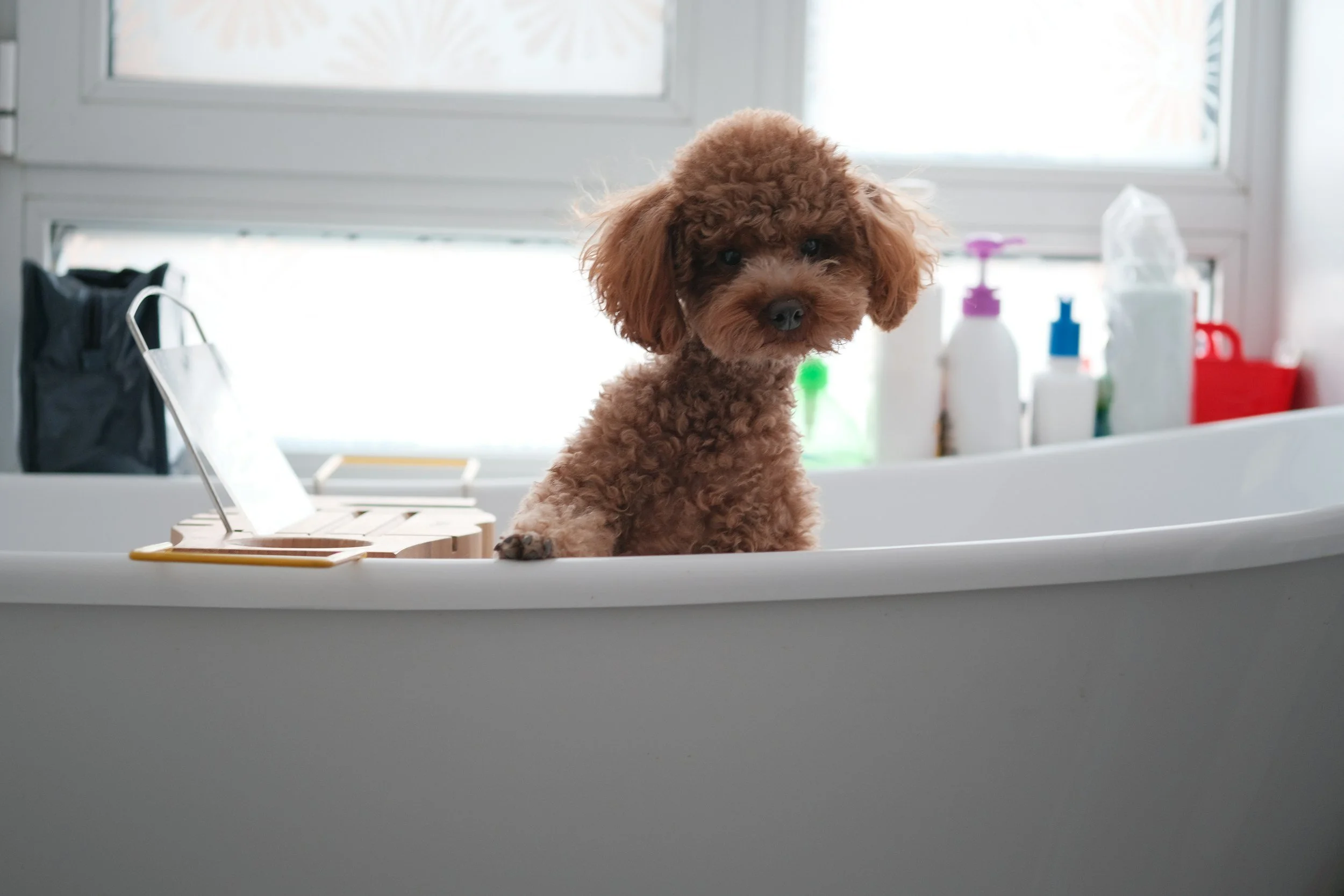
Caring for your dog
Dog grooming is influenced by coat type, maintenance habits, scheduling consistency, and individual handling tolerance. These factors determine how care is structured and how comfortably it can be performed.
-
Your dog’s coat is more than appearance. It is part of the skin and serves as protection, insulation, and a barrier to the environment.
Coat type, length, density, and texture all influence how maintenance should be approached. A short, smooth coat behaves differently from a dense double coat. Curly and continuously growing coats require a different level of care than shedding breeds.
“Low shedding” does not mean low maintenance. In many cases, it means hair remains trapped in the coat and must be removed through brushing and scheduled grooming.
Coat condition can also change over time. Season, age, hormones, environment, and underlying health all influence how a coat behaves and how frequently care is needed.
Understanding coat type helps create realistic expectations around length, maintenance, and scheduling. When coat and care are aligned, grooming remains manageable and humane.
-
Brushing is not cosmetic. It is maintenance.
Regular brushing removes loose hair, reduces tangles, distributes natural oils, and allows early detection of skin concerns such as irritation, parasites, or changes in texture.
Technique matters as much as frequency. Brushing the surface of the coat without reaching the skin often leaves tangles hidden underneath, especially in friction areas such as behind the ears, under the collar, in the armpits, and along the backs of the legs.
Curly, fleece, and long coats often require daily maintenance to prevent matting. Double coats benefit from routine undercoat removal, particularly during seasonal shedding periods.
Tangles should be addressed gently and before bathing. Water tightens knots and can make them significantly more difficult to remove.
When home maintenance aligns with coat type and desired length, professional grooming appointments remain more comfortable and predictable.
-
Matting develops gradually and most often forms in high-friction areas. If left unaddressed, small tangles can compact into dense mats that sit tightly against the skin.
Severe matting is not only a cosmetic concern. It can trap moisture, restrict airflow, and conceal irritation, sores, or developing skin conditions.
Attempting to pull apart tight mats can cause discomfort and stress. In some cases, clipping the coat short is the most humane option. This allows the coat and skin to recover safely rather than subjecting the dog to prolonged detangling.
When matting is significant, maintaining previous length may no longer be realistic. Humane handling and comfort always take priority over aesthetic preferences.
Preventing matting requires consistent brushing, realistic length choices, and appropriate scheduling.
-
There is no universal grooming schedule. Frequency depends on coat type, coat length, lifestyle, and the dog’s tolerance for handling.
Continuously growing coats often require shorter intervals between appointments to maintain length comfortably. Double coats may benefit from seasonal deshedding support. Short coats still require routine hygiene and skin checks, even if trimming is minimal.
If a dog is consistently arriving matted, the schedule or the length goal may need adjustment. Length and maintenance expectations must match.
Bathing frequency also varies. Dogs with allergies or skin sensitivities may require veterinarian-directed bathing schedules. Active outdoor lifestyles may require more frequent hygiene care than indoor lifestyles.
A realistic schedule protects both coat condition and the dog’s overall comfort.
-
Grooming requires cooperation. Each dog’s tolerance for handling, noise, restraint, and duration of care differs.
Signs of stress can include trembling, panting, lip licking, avoidance, freezing, or attempts to escape. Recognizing these signals early allows adjustments before stress escalates.
Some dogs benefit from shorter, more frequent appointments rather than extended sessions. Others may require gradual exposure to specific aspects of grooming, such as drying or nail care.
If a dog becomes overwhelmed, services may be modified, paused, or discontinued. These decisions are made to prevent injury and protect long-term tolerance for grooming.
Behavior reflects what a dog can comfortably handle at that moment.
Safe, humane handling defines the limits of each appointment.
-
Grooming outcomes are shaped by what happens both in the studio and at home.
Clear communication about coat condition, behavior history, medical concerns, and home maintenance routines allows care to be structured responsibly.
Professional grooming supports skin and coat health, but it does not replace veterinary diagnosis or treatment. When concerns such as persistent itching, infections, or injuries are observed, veterinary evaluation may be recommended.
Length goals, scheduling intervals, and maintenance routines work best when they are aligned and realistic.
When expectations are clear and care is consistent, grooming becomes predictable, manageable, and humane for everyone involved.