

Cat Grooming
Cat grooming is fundamentally different from dog grooming. Cats process stress differently, escalate more quickly, and have fewer safe handling options once tolerance is exceeded. These differences require specialized handling, heightened awareness, and clear safety boundaries.
-
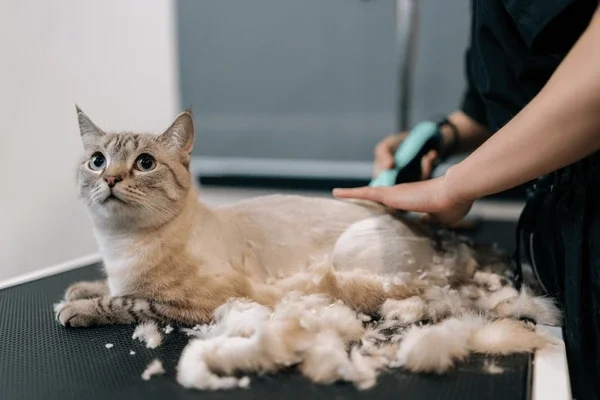
Cat grooming at The Groom Gallery is guided by observation, pacing, and humane decision-making. Each appointment is evaluated individually based on the cat’s temperament, coat condition, age, physical limitations, and tolerance for handling.
Grooming is never forced to meet a cosmetic outcome. Decisions are made in real time, based on how the cat responds throughout the appointment. When stress levels increase or tolerance decreases, the approach is adjusted immediately.
Cats are groomed in a calm, controlled environment by an experienced groomer familiar with feline stress signals, defensive behavior, and safe handling techniques.
-
Cat grooming services are designed to support coat health, hygiene, and comfort while prioritizing safety for both the cat and the groomer.
Services may include bathing with professional, cat-appropriate shampoos and conditioners, stress-conscious drying methods, coat maintenance or trimming when appropriate, nail care, and sanitary hygiene. Product selection, techniques, and pacing are adjusted throughout the appointment based on coat condition, skin sensitivity, and behavioral response.
Some cats benefit from shorter or staged services rather than a single extended appointment. In these cases, care is structured to reduce stress and lower the risk of injury while still supporting long-term coat and skin health.
-
Cat grooming involves inherent safety considerations that differ significantly from dog grooming. Cats have faster escalation thresholds, stronger defensive responses, and limited safe handling options once tolerance is exceeded. When a cat feels overwhelmed, reactions can be sudden and difficult to safely interrupt.
For this reason, temperament, handling tolerance, coat condition, age, and physical limitations are carefully evaluated before and throughout the appointment. Grooming decisions are guided by what can be done safely for both the cat and the groomer, not by completing a predetermined service.
If a cat exhibits escalating stress, defensive behavior, unsafe movement, or signs of distress, services may be modified, paused, or discontinued. These decisions are made to prevent injury, minimize distress, and protect the well-being of everyone involved.
-
Many grooming environments are not designed to safely support cats. High-volume settings, loud noise, shared drying spaces, and rigid service structures increase stress and risk during cat grooming. As a result, many groomers choose not to offer cat grooming at all.
In other cases, a cat’s temperament, coat condition, or response to handling may place grooming beyond what can be safely accomplished outside of a veterinary setting. This is not a reflection of the cat being “bad” or unmanageable. It is a recognition of humane and safety limits.
When grooming cannot be provided safely, alternative care options or veterinary involvement may be recommended. These recommendations are made to protect the cat, not to deny service.
-
Not all grooming requests can be met safely in a non-veterinary environment. Severe matting, medical concerns, extreme stress responses, or limited tolerance for handling may place humane limits on what can be accomplished in a single visit, or at all.
Safety and humane handling define the limits of care. Cosmetic outcomes never take priority over those limits.
Clear communication and realistic expectations support better outcomes for cats and for the people who care for them. This approach prioritizes long-term well-being over short-term results.